


Spotting Wildlife on a Norfolk Broads Boating Trip
Keep binoculars handy for otters, marsh harriers, and kingfishers while you navigate quiet waterways at a gentle, unhurried pace.

Why the Broads Reward a Slow Boat
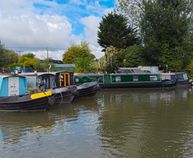
The Norfolk Broads are not a landscape that gives up its secrets in a hurry. The waterways are shallow, the reedbeds are tall, and much of the wildlife here has evolved to treat anything loud and fast as a threat. That, happily, suits a boating holiday down to the ground. A hire cruiser ambling along at three or four miles an hour is arguably the finest wildlife hide in Britain: it floats, it falls silent the moment you switch the engine off, and it puts you at eye level with the water rather than peering down at it from a bank.
What makes the Broads so generous is the density of habitats packed into a small area. In a single morning you can drift past an open broad, nose into a narrow dyke lined with alder and willow carr, and moor beside a grazing marsh where the grass is grazed short by cattle rather than machinery. That patchwork is why otters, marsh harriers and kingfishers all turn up within a few miles of one another — and why a week here feels far longer than it looks on the map.
The Stars of the Show
Otters are the prize. They were absent from the Broads for decades and have crept back steadily, and a quiet dawn drift along a dyke or the edge of a broad is your best chance of one. Listen for a sharp, explosive whistle, and watch for a chain of bubbles or a V-shaped wake where there should be no boat. Otters often hunt in short dives, surfacing with a fish and a crunch you can hear across still water.
Marsh harriers are the Broads' signature bird, and in spring and summer you will see them quartering low over the reeds on raised wings, dropping suddenly into the vegetation. Look for the pale, creamy crown of a female or the grey-and-black wings of an adult male — the "sky dancer" of old fenland names.
Kingfishers announce themselves with a thin, piercing whistle before you ever see the flash of blue. They favour overhanging branches above clear, slow water and are maddeningly good at sitting still until you have almost passed them.
Other likely sightings to keep half an eye out for:
- Bitterns, which boom in spring and show themselves as a stiff, heron-like shape flying low over reeds
- Great crested grebes with stripy humbugs on their backs in early summer
- Swallowtail butterflies nectaring on marsh thistle in late May and June
- Norfolk hawker dragonflies, with their distinctive green eyes
- Chinese water deer standing in the mist on the marsh edge at first light
- Cetti's warblers, heard far more often than seen, belting out their song from dense scrub
Timing Your Trip Around the Wildlife Calendar
Dawn is worth the alarm. Between roughly half an hour before sunrise and two hours after, the water is usually glass-flat, other boats are still tied up, and animals are relaxed. Dusk is nearly as good, particularly for otters and for bats over the water.
Season by season, the rewards shift. Late spring brings booming bitterns, displaying harriers and swallowtails. High summer is green and busy, best worked by heading out early and mooring up for a lazy middle of the day. Autumn sees harriers gathering at communal roosts, sometimes a dozen or more, wheeling down into the reeds at last light. Winter is quietly underrated: with the vegetation died back, otters, kingfishers and hunting harriers are all easier to spot, and the waterways are blissfully empty.
Kit and Technique
A pair of 8x42 binoculars is the sweet spot — light enough to hold one-handed on a moving deck, bright enough for dawn and dusk. Keep them slung around your neck rather than buried in a bag; the birds you miss are the ones you had to rummage for. A lightweight waterproof and polarising sunglasses cut the glare off the water and let you see beneath the surface.
The technique is simple: scan with your naked eye first, then lift the binoculars onto whatever caught your attention. Sweep slowly and stop often. Ask whoever is steering to keep well away from the bank — most disturbance comes from boats hugging the edge — and if you can, cut the engine and drift, or hold position with a mud weight in open water. Silence is your best piece of equipment.
Quiet Corners Worth Mooring Up For
Some stretches repay patience more than others. The upper reaches around Hickling and Barton are classic harrier country, with shallow, reed-fringed water and plenty of undisturbed margin. Ranworth and the wooded edges of the Bure give you kingfisher-perfect overhanging branches. The quieter arms of the Waveney, particularly above Beccles, and the maze of small dykes off the main rivers feel genuinely remote once the day boats have gone home.
Wherever you moor, respect the signage: several broads and marshes are nature reserves, and some banks are closed to landing during the nesting season. If you are asked to keep clear of an area, there is always a good reason.
A Few Gentle Rules of the Water
- Stick to the speed limit — wash undermines banks and floods nests
- Give nesting reeds, tern rafts and roost sites a wide berth
- Keep dogs quiet and on a lead near the water's edge
- Do not land on private marsh or reserve banks without permission
- Bin your litter, including fishing line and food wrappers
Do all that, and the Broads will quietly open up to you. Bring the binoculars, slow right down, and let the engine off at every opportunity — the best sightings almost always arrive in the silence.

Post a comment