


Accessible Countryside Days Out for Every Traveller
Look for level paths, radar keys, accessible toilets, and sensory-friendly spaces when planning a relaxed day in the great outdoors.

Finding the Right Kind of Countryside
The British countryside has a reputation for stiles, squeeze gates and muddy climbs — the sort of day out that quietly assumes everyone can hop a fence and stride up a fell. It doesn't have to be that way. Across the UK there are level paths, gentle boardwalks, surfaced trails and sheltered gardens where a wheelchair, a mobility scooter, a pushchair or a pair of uncertain knees can all manage comfortably. The trick is knowing what to look for before you set off, and giving yourself permission to choose the easy route. A slow amble beside a lake, with a bench every few hundred metres and a café at the end, is a proper day out.
Start With the Surface Underfoot
Ask about surface, gradient and width before you ask about distance. A two-kilometre path on compacted gravel is a very different prospect from the same distance on loose shingle or a root-tangled woodland trail.
- Surfaced trails — tarmac, resin-bound gravel or boardwalk are the most reliable options for wheels and walking sticks alike.
- Gradients — anything gentler than roughly 1:12 is usually manageable. Look for routes described as "level" or "gentle" rather than "rolling".
- Width — a metre and a half lets two people pass comfortably, dog included.
- Seating — regular benches matter more than a short total distance. Frequent rests turn a long route into a possible one.
- Drainage — winter rain can turn a "firm" path into a bog, so check whether a route floods before you commit.
Gates deserve a mention too. Kissing gates and stiles are the enemies of an easy day; seek out routes with self-opening gates, simple latches or radar-key-accessible pedestrian gates.
Radar Keys, Toilets and Changing Places
An accessible day out lives or dies by its loos. A radar key — the standard key that opens thousands of accessible toilets around the UK — is worth keeping on your keyring. Just don't assume it will work everywhere: some sites prefer a code from the visitor centre, and others lock facilities entirely outside peak season.
- Changing Places facilities — larger rooms with a hoist, an adult-sized changing bench and space for a carer. They remain rarer than they should be, so plan a route that passes one when you need it.
- Radar-key toilets — usually unisex, usually on the flat, occasionally with a shower.
- Baby changing rooms — often separate from accessible toilets, and not always step-free. A family room may be the better choice.
- Blue-badge parking — check how far the bay is from the actual entrance. "Near the car park" can still mean a long push uphill.
A twenty-minute phone call to a visitor centre can save an hour of discomfort. Ask directly: is the main path level, are the toilets open, and is there a step-free entrance?
Quiet Corners for Sensitive Senses
Accessibility isn't only physical. For visitors who find noise, crowds or bright light overwhelming, the countryside can be both a refuge and a challenge — a busy car park, barking dogs and a clattering café can undo a peaceful morning in minutes.
- Arrive early. The first hour after opening is almost always the calmest.
- Choose off-peak days. Midweek outside school holidays transforms even popular sites.
- Look for quiet or sensory trails — some woodlands and gardens set aside low-stimulation routes away from play equipment and audio displays.
- Pack ear defenders and a familiar comfort item. Wind, water and birdsong are lovely but unpredictable.
- Plan an exit-first loop. A short circuit that returns to the car park quickly gives you an easy escape without a long walk back.
Many sites now offer quiet hours, sensory backpacks or visual guides showing what to expect. It's always worth asking — the answer is often yes, even when it isn't advertised.
Hidden Retreats Worth the Short Detour
The best accessible countryside is frequently the least famous: the place with no queue at the gate and a bench nobody else has found. Look for:
- Walled and physic gardens — flat, gravelled, bench-heavy and beautifully sheltered from the wind.
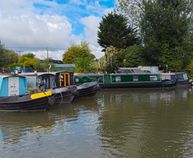
- Reservoir and canal towpaths — wide, level and often surfaced for miles.
- Reclaimed railway lines — gentle gradients, few gates and long, straight, tree-lined stretches.
- Country park lakes — a circular route, a café, and parking close to the water.
- Coastal boardwalks and promenades — firm underfoot, with sea air and frequent places to sit.
Small churchyards, community woodlands and nature reserves with a single hide can be just as rewarding. A hide with a ramp and a wide window is one of the most restful places in Britain.
Practical Habits for a Relaxed Day
Good preparation is quiet preparation. Charge mobility equipment the night before, and take a spare battery if your scooter has one. Pack a flask, a lightweight waterproof and a folding stool or shooting stick — sitting down somewhere unexpected is often the difference between a lovely afternoon and an early retreat.
Check the weather for the specific site rather than the nearest town; coastal and upland spots can be several degrees cooler and considerably windier. Tell someone your rough route and expected return time, particularly on quieter trails where phone signal is patchy. Keep a printed note of the site's phone number, and screenshot any maps before you lose signal.
Finally, allow yourself a slower pace. Accessible countryside days are not failed hill walks — they are their own pleasure. A flat mile through bluebells, a towpath with moorhens, a walled garden in the rain: these are the days people remember, and they belong to every traveller.

Post a comment